
“I’d love to try paragliding… but I’m scared of heights.” It’s the sentence we hear most often. The good news: the vast majority of people who fear heights fly with no problem at all — and land with a huge smile. Here’s why.
Vertigo and paragliding are very different
What most people call “fear of heights” is triggered by a visual and physical link to the ground — the edge of a cliff, a balcony, a ladder. Your brain measures the drop right below your feet and sounds the alarm. In paragliding, that link doesn’t exist: you are not at the edge of the void, you are sitting comfortably inside it, with no vertical reference beneath you. That’s why nearly all of our “scared of heights” passengers feel none of the dread they expected.
Why you barely feel the void
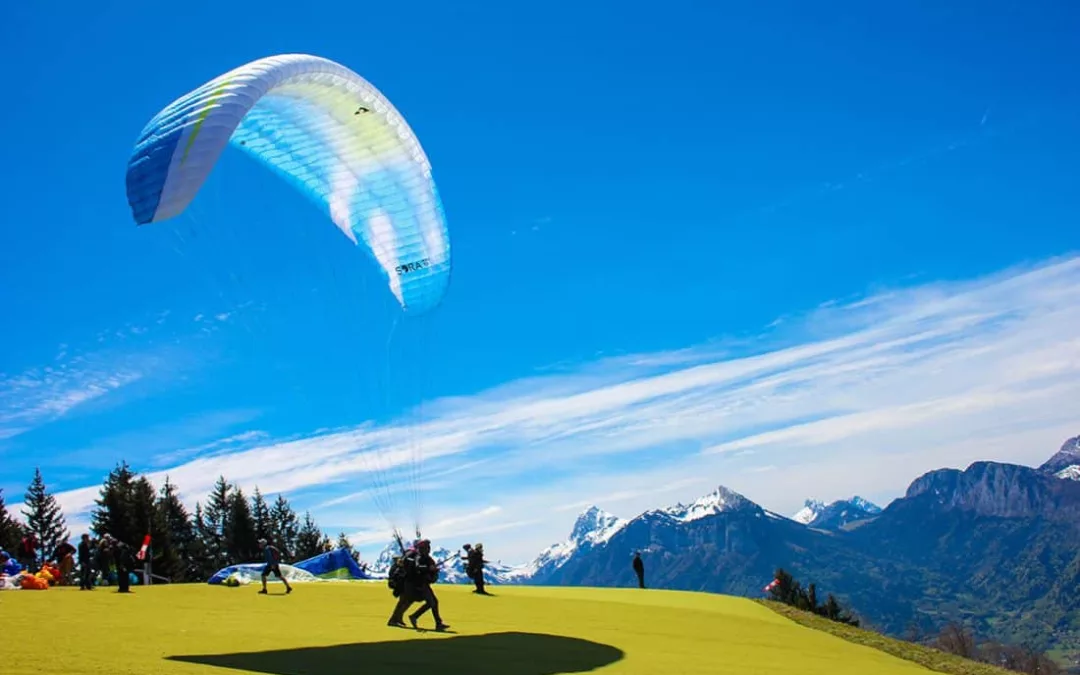
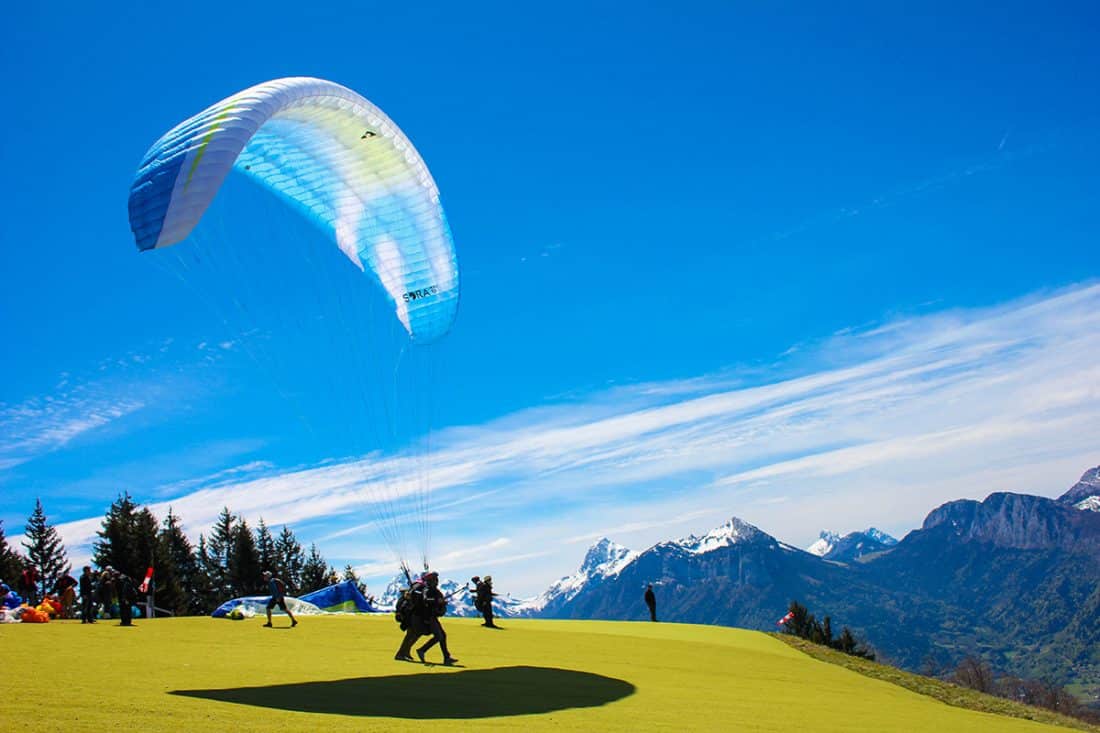
- The take-off is gradual — no jump, no drop. A few steps and you lift off gently.
- You are seated and supported in a cocoon-like harness, like a suspended armchair.
- No vertical reference: with no wall or railing below, the brain loses its usual height cues.
- It feels like gliding, not falling — closer to swimming than to a jump.
Many passengers sum it up: “I thought I’d be terrified, and it was incredibly calm.”
Our tips if you are anxious
- Tell your instructor — he will adapt the take-off and the flight to reassure you throughout.
- Choose a calm flight (the Classic), with no acrobatics.
- Prefer the morning, when the air is smoothest.
- Look at the horizon, not straight down — it’s calming and spectacular.
Which flight to choose
If you are sensitive to heights or it’s your first time, go for the Classic flight: calm, contemplative, 10 to 20 minutes, no acrobatics. Avoid the Sensation flight (wing-overs, 360°) for now — you can always come back for it once you’re hooked! See all options on our paragliding in Annecy page.
FAQ
I really have vertigo — can I still paraglide?
Yes, in the vast majority of cases. There is no vertical reference under your feet and no sensation of falling, so the usual vertigo signal isn’t triggered. Choose a calm flight and tell your instructor.
Will I feel a falling sensation at take-off?
No. The take-off is gradual: a few steps, the wing inflates, and you rise smoothly.
What if I don’t feel well up there?
Your instructor manages everything and adapts the flight in real time — he can fly even more gently and shorten it if needed.
Ready to overcome your fear? Book your calm Classic flight over Lake Annecy.